Golden Art Deco Ornaments: Elevating Your Design Projects
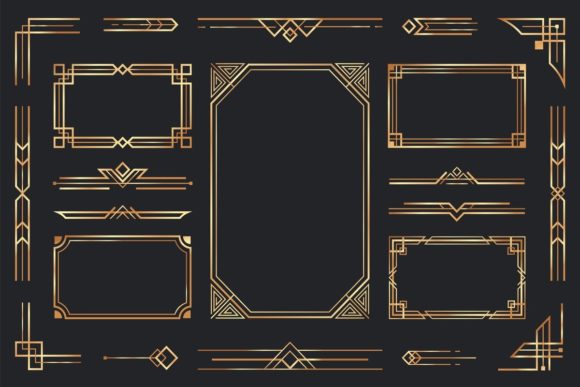
There's a certain confidence that comes with using design elements that have stood the test of time. Golden Art Deco Ornaments tap directly into that feeling. They aren't just decorative flourishes; they are a direct line to an era of glamour, geometric precision, and unapologetic luxury. This collection of vector symbols offers more than just pretty shapes. It provides a toolkit for instant sophistication, allowing designers, entrepreneurs, and creators to inject a powerful aesthetic into their work with a few well-placed strokes.
At its core, this set is built on the principles of the Art Deco movement. Think of the iconic architecture of the Chrysler Building or the lavish interiors of 1920s ocean liners. You'll see sunburst motifs radiating outward, symmetrical chevrons creating rhythmic patterns, and strong geometric forms like circles, triangles, and rectangles arranged in harmonious, often repetitive, compositions. The "golden" aspect isn't just a color suggestion; it's a statement of value and warmth. These ornaments carry a personality that is bold, structured, and inherently stylish. They feel both retro and timelessly modern, a combination that gives them incredible versatility.
Where This Aesthetic Truly Shines
The strength of Golden Art Deco Ornaments lies in their ability to frame, accent, and elevate. They are not workhorse text fonts, but rather powerful display assets. For logo design, a single, well-chornished corner or a symmetrical border element can anchor a brand mark, giving a new business an immediate sense of heritage and quality. Imagine a boutique hotel, a high-end chocolatier, or a luxury consulting firm using these elements in their brand identity. They communicate exclusivity and attention to detail before a word is read.
In editorial design and packaging design, their utility is equally profound. Use them to create ornate frames for magazine covers, chapter headings in a book, or to add a decorative seal to a product box. They transform ordinary layouts into curated experiences. For web design, consider using a simplified ornament as a divider between sections or as a subtle background pattern. On social media graphics, a golden corner flourish can make a promotional post or a story template feel more premium and intentional, helping content stand out in a crowded feed.
Practical Guidance for Implementation
Working with a set like this requires a thoughtful approach. First, understand that these are design assets, not a replacement for a primary typeface. Their role is decorative. The key is restraint. Overuse can quickly turn elegant into gaudy. Start by selecting one or two ornament styles that complement your project's overall tone. A single sunburst can serve as a powerful focal point, while a pair of mirrored corner pieces can elegantly frame a title.
A critical step is font pairing. The geometric nature of these ornaments pairs beautifully with clean, modern sans serif fonts for a crisp, contemporary look. They also harmonize wonderfully with elegant serif typefaces to reinforce a classic, luxurious feel. Avoid pairing them with highly decorative script or handwritten fonts, as the visual complexity will compete and create clutter. The goal is contrast that complements, not conflict.
Since the product includes vector files (EPS10), you have full control. This is where practicality meets creativity. Using a vector editor like Adobe Illustrator, you can scale the ornaments to any size without loss of quality, perfect for everything from a small favicon to a large-format banner. You can also easily recolor them to match your brand palette, break apart compound paths to isolate specific elements, or simplify the designs for more subtle applications. Always check the licensing for your intended use, especially for commercial projects, to ensure you have the proper rights.
Ultimately, Golden Art Deco Ornaments are more than just a retro novelty. They are a strategic tool for adding a layer of visual sophistication and narrative depth. They help build a cohesive visual language that speaks of quality, precision, and timeless style. When used with intention, they don't just decorate a design—they define its character.